Uncategorized

Subscribe


Monday, May 31st, 2010

Celiac and High Liver Enzymes

A woman asked about any relationship to her celiac disease and her fatty liver infiltration as well as low blood platelets. Here are some references to read about this as well as some advice worth looking into if this is a concern of yours.

A big cause of fatty liver is thought to be fructose http://www.ncbi.nlm.nih.gov/pubmed/18395287

Soft drinks have been looked at http://www.ncbi.nlm.nih.gov/pubmed/19765850

CD can cause elevated liver enzymes and liver disease http://jccglutenfree.googlepages.com/liverdisease2

Another reference: http://emedicine.medscape.com/article/175472-overview

One lady wrote in and shared all this: I can tell you that two celiac friends of mine had low platelets and they both improved with taking vitamin K, the natural one not the synthetic one, 1 capsule a day (I think it is 100 MICROgrams). Within a few months their blood tests came back up. Possibly try the vitamin K but not if you have a clotting disorder. It is only the MDR dose anyway you would get in a multiple vitamin and is going to be a lot safer than some chemo drug.

I’m pretty sure I read that fatty liver is a deficiency problem, something like inositol. You aren’t going to get this info from an MD, you’ll have to go search on the net or look in some really good nutrition/alternative
medicine books.

I’m not sure if you know this, but low platelets  can be called”idiopathic thrombocytopenic purpura” or “immune” t.p. Google will bring lots of info, some of it old. I think the immune name is newer, because I think they now think it’s an autoimmune disease.

Hope this helps! Tina Turbin

Add to FacebookAdd to DiggAdd to Del.icio.usAdd to StumbleuponAdd to RedditAdd to BlinklistAdd to TwitterAdd to TechnoratiAdd to Yahoo BuzzAdd to Newsvine


Tuesday, May 11th, 2010

Saturday May 15th, Los Angeles- Celiac Disease Fdn. Education Conference and Food Fair!

Saturday, May 15  8:00a to 4:00p at the Marriott Los Angeles Downtown, Los Angeles, CA   Phone: (818) 990-2354
Celiac Disease expert Peter H.R. Green, MD and gluten-free diet expert Shelley Case, RD will be speaking among others.
Celiac Disease Foundation  ( www.celiac.org) Annual Education Conference and Food Fair is for people of all ages who have celiac disease/dermatitis herpetiformis or who care about someone who does. This is a very educational experinec and I highly recommend that you attend if you can.

The Conference will provide opportunities for people to share and learn more about celiac disease and the gluten free lifestyle from experts. You will hear, see taste and experience quite a lot. You will not walk away displeased.

Over 50 vendors will showcase their gluten-free foods.

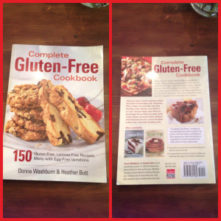
Again, Celiac Disease expert Peter H.R. Green, MD is flying in from New York and gluten-free diet expert Shelley Case, RD will be speaking among others. I am looking forward to seeing them both and many others. Read about her fabulous book, the Comprehensive resource Guide here.

Tina Turbin

Add to FacebookAdd to DiggAdd to Del.icio.usAdd to StumbleuponAdd to RedditAdd to BlinklistAdd to TwitterAdd to TechnoratiAdd to Yahoo BuzzAdd to Newsvine


Saturday, May 1st, 2010

Alana on the Martha Stewart Show- promotes Nonuttin’

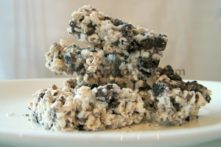
These gluten-free , allergen-free snacks are easy-to-make granola bars from Alana Elliott of Nonuttin’ Foods who was happy to be on Martha Stewart show on April 29th! These child friendly recipes are terrific on the go as well as loaded with fiber and taste. Please read about Alana’s gluten-free company! Be sure and use gluten-free oats and you are set to go!

Ingredients

Makes about 16 bars

  • Nonstick cooking spray
  • 1 3/4 cups gluten-free quick-cooking oatmeal
  • 1 1/4 cups gluten-free crisp-rice cereal
  • 1/2 cup mini gluten-free semi-sweet chocolate chips
  • 1/3 cup lightly packed light-brown sugar
  • 1/3 cup vegetable oil
  • 1/3 cup honey

Simple Directions

  1. Spray an 8-by-8-inch baking dish with nonstick cooking spray; line baking sheet with parchment paper, leaving a 1-inch overhang on all sides. Set aside.
  2. Place oatmeal and rice cereal in a large bowl; stir to combine. Set aside.
  3. In a medium saucepan, mix together brown sugar, oil, and honey. Place over medium-high heat; bring to a gentle boil. Cook, stirring, for 1 minute. Remove from heat and add to oatmeal mixture; stir until oatmeal mixture is fully coated and well combined.
  4. Evenly pour oatmeal mixture into prepared baking dish; sprinkle with chocolate chips. When mixture is cool enough to touch, press down into pan. Let cool to room temperature. Cut into 16 (1-by-4-inch) bars. Granola bars can be stored at room temperature in an airtight container for up to 1 week, and frozen up to six months.

Alana was happy to share her recipe with Martha Stewart on April 29th live, helping to increase awareness for Celiac disease. Watch the review video now.

Tina Turbin

Add to FacebookAdd to DiggAdd to Del.icio.usAdd to StumbleuponAdd to RedditAdd to BlinklistAdd to TwitterAdd to TechnoratiAdd to Yahoo BuzzAdd to Newsvine


Wednesday, March 10th, 2010

Gluten Free Cooking Expo is about to START!

That’s right! It’s that time of year again…the Gluten Free Cooking Expo and Vendor Fair is coming! Jen Cafferty is at it again! Attracting participants from all around the country and Canada, this great event teaches gluten-free dieters how to make delicious and healthy GF foods and more!

April 17th and 18th – The Wyndham Hotel, Lisle, Illinois

Some of the events to look forward are two days of GF cooking demonstrations by acclaimed authors, chefs, and nutritionists; printed recipes for you to refer; and learning how to prepare each dish (with taste-testing, too!). Admission to the vendor fair is included in your Expo registration, and Gourmet Gluten Free lunch is provided as well as a gift bag of gluten-free goodies.


To find out more and sign up, check out the link below!  For questions, contact Jen Cafferty at jen@gfreelife.com or 847-217-1317.   Some tables are still available for vendors if you’d like to sample or sell your products. http://gfreelife.com

Tina Turbin

Add to FacebookAdd to DiggAdd to Del.icio.usAdd to StumbleuponAdd to RedditAdd to BlinklistAdd to TwitterAdd to TechnoratiAdd to Yahoo BuzzAdd to Newsvine


Monday, March 1st, 2010

Gluten-Free Company – Uli Mana


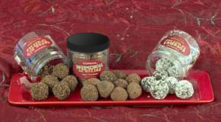
Uli Mana is a successful company with nothing but positive energy in every handmade product, founded by single mom Theresa Green. My L.A. and Florida gluten-free test group and I had the wonderful opportunity to test these delectable little morsels of yum. Each and every product has the capability to tease one’s taste buds and offers a smooth taste. They are a delicious treat for anyone needing a gluten-free chocolate fix. Who doesn’t have one of those cravings now and then, especially us women! Sorry men, I don’t mean to leave you out of this but there are just those times of the month- “Hey honey, don’t you dare touch MY Uli Mana.”

YouTube Preview Image

Theresa Green started her career with Nirvana Manna (renamed later Maca Manna) after expected success with a home recipe passed to a friend at the Natural Foods Expo 2005. Word spread, and she could only grow and expand to incorporating UliMana. Her made-up name is semi-Huna—a Polynesian and Hawaiian science practiced by the aboriginals of those regions. It means asking the goddess Uli, the “Goddess of Serenity,” for the blessings of life force, energy, and vibrant health—“mana.”

All the chocolates used are raw as well as all of her ingredients, offering the raw food community the opportunity to take advantage of the many health benefits of raw chocolate, which reduces blood pressure, contains antioxidants, relaxes muscles (due to the mineral content), and increases insulin activity.

Theresa’s initial products were all sweetened with raw honey, and she featured many Cacao mixes. Two years ago she developed new products as a result of introducing agave into her test kitchen. The result was new versions of truffles, such as Goji Cherry Truffles, Dark Cacao Truffles, and her to-die-for Truffle Butter.

The new truffles were an immediate hit. As Theresa explains, they were an “eat-now” food and did not require any mixing or processing by the consumer except the process of hand-to-the-mouth-and-enjoy. Sales soared.

The  manufacturing facility is generously supplied by Blue Ridge Food Ventures, founded by Advantage West, funded by the State of North Carolina to help business. She has access to storage space, a loading dock, shipping and receiving, and even legal and accounting advice. She credits much of her ease in the business’s evolution to the opportunities her state offers through this facility, stating she’s never needed to take out a loan or sell shares of the business.

With the incorporation of UliMana strategically placed on a positive astrological day, Theresa continues to hire only positive people with positive energy, and all products continue to be raw and made by hand. I asked her what we can expect in the coming future, and she openly said a rice syrup version of new delectables to cater to the needs of the macrobiotic consumer, who will be very pleased, she’s sure.

We testers are still raving about Uli Mana and all the handmade treats which passed our palates.

Tina Turbin

This food company is given a thumbs up and is HIGHLY recommended by my entire team here at www.GlutenFreeHelp.info

Add to FacebookAdd to DiggAdd to Del.icio.usAdd to StumbleuponAdd to RedditAdd to BlinklistAdd to TwitterAdd to TechnoratiAdd to Yahoo BuzzAdd to Newsvine


Sunday, February 28th, 2010

Link Demonstrated between Child Psychiatric Disorders and Gluten Sensitivity

Recent research is now indicating that there may be a link between Autism, Attention Deficit Hyperactivity Disorder (ADHD) and other developmental and child psychiatric disorders and an allergy or sensitivity to gluten. Gluten is a protein found in barley, rye, and wheat, and it is estimated that millions of Americans have a sensitivity or allergy to it. Gluten intolerance can affect the entire body, leading to a variety of troubling physical as well as mental symptoms.

Upon a change in diet, various developmental disorders have been documented to lessen in some cases. Some of the disorders the symptoms for which were relieved are autism, attention deficit hyperactivity disorder (ADHD), attention deficit disorder (ADD), non-verbal learning disorder (NLD), and pervasive development disorder (PDD).

These studies which link gluten intolerance to autism and other child mental disorders have noted that gluten-sensitive children will also display physical symptoms such as bloating, frequent gas, constipation, diarrhea, dark shadows under the eyes, excessive sweating, and pale skin. These physical problems can clue parents into whether their autistic or ADHD child may have a gluten allergy.

So what can you do if you suspect that your child has a gluten allergy? Thankfully, a gluten allergy can be confirmed with a simple blood test. Also, gluten can also be eliminated from the diet and then the child observed for improvement. It is important to check with your doctor before significantly changing the child’s diet.

Tina Turbin

Recent research is now indicating that there may be a link between Autism, Attention Deficit Hyperactivity Disorder (ADHD) and other developmental and child psychiatric disorders and an allergy or sensitivity to gluten. Gluten is a protein found in barley, rye, and wheat, and it is estimated that millions of Americans have a sensitivity or allergy to it. Gluten intolerance can affect the entire body, leading to a variety of troubling physical as well as mental symptoms.

Upon a change in diet, various developmental disorders have been documented to lessen in some cases. Some of the disorders the symptoms for which were relieved are autism, attention deficit hyperactivity disorder (ADHD), attention deficit disorder (ADD), non-verbal learning disorder (NLD), and pervasive development disorder (PDD).

These studies which link gluten intolerance to autism and other child mental disorders have noted that gluten-sensitive children will also display physical symptoms such as bloating, frequent gas, constipation, diarrhea, dark shadows under the eyes, excessive sweating, and pale skin. These physical problems can clue parents into whether their autistic or ADHD child may have a gluten allergy.

So what can you do if you suspect that your child has a gluten allergy? Thankfully, a gluten allergy can be confirmed with a simple blood test. Also, gluten can also be eliminated from the diet and then the child observed for improvement. It is important to check with your doctor before significantly changing the child’s diet.

Tina Turbin

Add to FacebookAdd to DiggAdd to Del.icio.usAdd to StumbleuponAdd to RedditAdd to BlinklistAdd to TwitterAdd to TechnoratiAdd to Yahoo BuzzAdd to Newsvine


Sunday, February 28th, 2010

How Much Gluten is Too Much for Your Celiac Child?

The amount of gluten that can be tolerated varies among people with celiac disease. In general, research suggests that less than 10 milligrams (mg) of gluten daily is unlikely to cause significant damage to the intestines in most celiac people. However, these small amounts could still be enough to make a person feel unwell.

So how small is 10 mg? A dime weighs about 2,200 mg (2.2 g). Tricia Thompson, RD, a celiac disease authority, explains that a one-ounce slice of regular white bread has approximately 3,515 mg of gluten, or 351 times the maximum daily amount that’s safe for celiac children. That means even a crumb is too much!

Now, this doesn’t mean that you can cut a slice of bread into 350 little crumbs and feed your child one of them; even if your child’s diet is otherwise gluten-free, chances are good that he’s still getting some gluten daily. Regulations in most parts of the world allow a product to be labeled gluten-free if it contains up to 20 parts per million of gluten (equivalent to about 20 mg per kilo). Even a slice of gluten-free bread contains a little over 1/2 mg of gluten.

It can be a challenge saying no to your child when he wants “just a little” bit of a gluten-containing product, especially on special occasions. After all, that bite-size candy looks pretty small—how much gluten could it possibly contain? However, sticking to an entirely gluten-free diet is not only the best way, but the only way, to ensure your child’s gluten intake is at a safe level.

Tina Turbin

Add to FacebookAdd to DiggAdd to Del.icio.usAdd to StumbleuponAdd to RedditAdd to BlinklistAdd to TwitterAdd to TechnoratiAdd to Yahoo BuzzAdd to Newsvine


Saturday, February 13th, 2010

Celiac Disease and Scoliosis


Many people have wondered if there  happens to be a correlation with scoliosis and celiac disease, I was one of them.
I was suddenly diagnosed with mild scoliosis and presented with my X rays after my third child. I had previous X ray and they were never ”crooked”. It just so happens that a number of years later I was finally diagnosed celiac as well. Very interesting, is there a connection here?
Marion’s ( from Oregon) had asked the same question and gathered some information which she said I could share with you. Here are her results:

Thank you to everyone who responded to my question.  I received 28 responses.  23 people said either they or someone in their family had both cd and scoliosis.  1 person said they are not associated, but are hereditary.  1 person said there’s no connection.  Several people mentioned malnutrition as being a possible factor in scoliosis.  A few people suggested that I do a Google search on the topic, which I have extensively done.  I’m convinced that there’s a connection, and I’m factoring that into my daughter’s treatment plan.   


Websites to check:
http://www.scoliosis-world.com/old_polls.htm

I sure hope this helps answer your questions about this too . Tina Turbin


Add to FacebookAdd to DiggAdd to Del.icio.usAdd to StumbleuponAdd to RedditAdd to BlinklistAdd to TwitterAdd to TechnoratiAdd to Yahoo BuzzAdd to Newsvine


Saturday, February 6th, 2010

Researching “Mind-Body” to Treat Celiac Disease

As you know, treating celiac disease with a gluten-free diet can  be quite a challenge, as even just the smallest exposure to gluten can cause damage to the small intestine and make us celiac quite sick.

With this in mind, Dr. Ali Keshavarzian, vice chairman of medicine and gastroenterologist at Rush University Medical Center, has been looking into the effectiveness of mind/body techniques in the treatment of celiac disease.

Celiac patients who are enrolled into the celiac disease and mind/body study at Rush will be randomly assigned to two course assignments for a period of eight weeks. If you’d like to find out more information about the study or to enroll, you can contact Dr. Sunana Sohi at 312-942-1551 or Sunana_Sohi@rush.edu.

Tina Turbin

Add to FacebookAdd to DiggAdd to Del.icio.usAdd to StumbleuponAdd to RedditAdd to BlinklistAdd to TwitterAdd to TechnoratiAdd to Yahoo BuzzAdd to Newsvine


Friday, February 5th, 2010

Gluten-Free a New Life, Part 2-a True Story by Maureen L. Ellis, Ph.D.

Living Fullfilled: Adapting to Life Gluten-Free Name: Maureen L. Ellis, Ph.D.

I am originating and authorizing Tina Turbin to share this story with you.

Maureen has generously offered to share her continued story as time progresses. Check back for Part 3 or sign up for the RSS feed on the right hand column.(this means you will get updates sent to you in case you are not familiar with this feature) Read Part 1

“Here is my first tip to anyone going through a difficult diagnosis: go with your instincts and find a doctor who you trust, who is kind, compassionate and willing to listen to you as a person. Switching doctors saved my life – I have no doubt in my mind.”

Everyone has a story to tell and my journey toward living a healthy, gluten-free lifestyle is a unique story, one of which I hope will give other people hope for living a “ full” filled life after years of frustrations, tests, diagnosis and acceptance. From my personal experience, I can understand why someone would not feel fulfilled and would almost feel deprived being thrown into a situation where they can no longer eat the foods they have grown to love and share with their family and friends, but when the order was given for me to go gluten free, I was willing to do anything to feel better and bring a sense of normalcy and peace back into my life and that of my family. My name is Dr. Maureen Ellis, and I have Systemic Lupus Erythemtosus (SLE), which is a chronic autoimmune connective tissue disease that can affect any part of the body where the immune system attacks the body’s cells and tissue, resulting in inflammation and tissue damage. Lupus has affected my central nervous system, gastrointestinal tract, biliary tract and pancreas. Please join me in my adaptation to a “full” filling gluten-free lifestyle.

After my children were born I decided to get my master’s degree. I fell in love with higher education and decided to pursue my Ph.D. I successfully defended my dissertation the month before I turned 41 and started my first tenure-track position two months later at a research institution. I felt like everything in my life had fallen into place and it was finally time to enjoy the fruits of my labor. We had a beautiful home, two great kids, my husband loved his job and we were starting to make our new environment feel like home. In April 2005, I went in for my annual exam and my doctor found a lump in my left breast. Without delay I had numerous tests and ended up in a surgeon’s office who immediately scheduled me for a lumpectomy to remove the tumor. He was 95% sure that my lump was cancerous. Believe it or not, the tumor was benign, but something went terribly wrong during surgery; it appeared as if my computer had decided not to reboot because when I woke up on May 7, 2005, nothing in my life would ever be the same. Now that I have been fully diagnosed, the doctors believe that Lupus had been a sleeping giant waiting to be woken up and we have been able to go through my childhood and realize that the symptoms of gluten intolerance and GI disorders have been a part of my life since I was a small child.


Following the lumpectomy, I couldn’t keep food down, had constant diarrhea and eventually became dehydrated so I was admitted back into the hospital. They hooked me up to an IV and some good drugs then sent me home to recuperate, only to find myself readmitted twice in the next couple of weeks. The doctors in the hospital said it was time to get to a specialist that there was definitely something strange going on inside. One doctor mentioned Crones Disease and Colitis so next step was making an appointment with a gastroenterologist. I went in expecting to get help and start feeling better soon as I was teaching summer school and it was tough when I didn’t have any energy. Right away he was positive it was Crones Disease, which is an inflammatory bowel disease or Celiac Sprue, which is an autoimmune disorder of the small intestine causing a mal-absorption syndrome from the ingestion of gluten-containing foods . I had the usual battery of tests like a sigmoidoscopy, upper GI, several blood and stool tests, all of which came back negative, except I had exceptionally fast transit and was trans-absorbing nutrients, which meant that my food was moving through my GI tract so fast that I wasn’t able to absorb any of the nutrients so I was suffering from malnutrition. Since I was continuing to lose weight from the chronic diarrhea and I was losing my appetite for food, I started pushing the doctor for answers, especially since we were already into early August and I wanted to be well before the new school year started. Looking back now, that was such an unrealistic goal as it took four years to get a complete diagnosis. In the meantime, the doctor suggested we start eliminating lactose to see if that helped and sadly enough, getting rid of my morning latte did help some with the gas and bloating but diarrhea was still running my life. I knew that as soon as I ate, within 20 minutes I would head straight to the bathroom with severe cramping and watery diarrhea. My life was literally revolving around what I ate, when I ate and then my distance to a bathroom. I started to feel isolated and was afraid to go out in public for fear there wouldn’t be a bathroom close enough when the trots came on. I had severe debilitating pain in my upper-right quadrant to the point I felt like I was being stabbed by a knife. One night I lay in bed planning my funeral because I was afraid to wake my husband and tell him I thought I was dying.

About a week before the fall semester began I prepared and had my colonoscopy and an endoscopy. And yes its true, the prep is far worse than the actual procedure because I remember nothing. The problem was that I never recovered and started becoming very, very sick. The results were basically inconclusive for everything. He took several biopsies and said he could rule out Crones for now, but it could be Celiac, but for now he would go with Irritable Bowel Syndrome (IBS). When I woke up, I about went insane because I knew in my heart of hearts this was something more serious than IBS. This was not stress related or because of something I ate, but something had gone terribly wrong with that surgery and I needed someone who would get to the bottom of it. I felt very alone and scared. Unfortunately at this point I didn’t have any energy to fight this doctor. By the end of the weekend, I was too weak to get out of bed so my husband called the doctor’s office and thankfully, he was on vacation. This gave my husband the idea to call our former landlord who was a Gastroenterologist. He explained what was going on and said, “Maureen is dying can you do anything for her”. My new doctor rode in on his white horse with his white hat on and very gently took over my case. Here is my first tip to anyone going through a difficult diagnosis: go with your instincts and find a doctor who you trust, who is kind, compassionate and willing to listen to you as a person. Switching doctors saved my life – I have no doubt in my mind.

My new doctor put me on some meds to get me through the weekend and I went in to see him the next Monday.  After looking at my medical history and test results, he said, I think I know what’s wrong with you but you’re going to have to trust me on this. And this is the moment when my journey changed. The first step was to start pain killers for the abdominal pain, sleeping pills so I could get a decent night’s sleep because as he said, you can fight the pain when you are rested, and we started in with a new battery of tests to determine gallbladder function. After a trip to the ER and several tests later, in October my gallbladder became infected and inflamed, which had to be removed. After surgery I didn’t seem to improve and continued to decline in health. By this time my diet consisted of saltine crackers, soup and oatmeal. The doctor suspected I had developed Sphincter of Oddi Dysfunction, which affects the valves in the biliary tract. The sphincter of oddi is a muscular valve that controls the flow of bile and pancreatic juice through the bile tract (area from the liver, gallbladder and pancreas to the stomach) and flows into the first part of the small intestine. Sphincter of Oddi Dysfunction (SOD) happens when that valve doesn’t relax and causes severe spasms. This causes the bile juices to back up and causes episodes of severe abdominal pain.

Typically, doctors wait 90 days after gallbladder removal to perform an ERCP, which is a type of endoscopy, to measure sphincter pressure. Unfortunately, my body didn’t wait that long and the sphincter valve ruptured on its own sending me to the ER in excruciating pain. The doctor explained that that valve is held together with what appears to be rubber bands and I was feeling each rubber band snapping free. The doctor performed emergency surgery to repair the sphincter valve and pancreatic valve. Recovery went very slowly from the SOD surgery and the upper-right quadrant pain was still present, although not as bad as it was before the surgery. My gastrointestinal symptoms continued on through the spring and in early summer of 2006, my doctor repeated the ERCP to clean out scar tissue he thought was causing the continued pain. Since my GI symptoms failed to improve, he decided to do the capsule endoscopy to test for celiac damage. This procedure required me to swallow what looked like a capsule. There was a tiny camera implanted in the capsule so when I digested it, it took pictures of my digestive system. I also wore a contraption all day that logged the pictures being taken inside of me. I am a technology geek and I have to admit, I thought it was pretty high-tech and very interesting. Although the blood tests did not come back positive, the capsule endoscopy did indicate that I probably did have Celiac Disease or at least I had intestinal damage to support that diagnosis so he determined the best course of action would be to remove all gluten from my diet. Through elimination, we also determined it was best to eliminate lactose and egg yolks as well. Following the gallbladder surgery and Sphincter of Oddi surgery I have not been able to process much fat and by this time I had pretty much eliminated most meat and nuts because they caused too much pain and distress and my body just refused to digest them. With my new diet in hand; a trip or two to a registered dietician, in August 2006 I began my journey into living a fulfilled life without gluten, lactose, egg yolks, raw fruits and vegetables along with a low-fat diet.

To be continued….

Dr. Maureen Ellis, Ph.D.
Business and Information Technologies Education Department
East Carolina University

Thank you Mareen. Maureen has generously offered to share her continued story as time progresses. Check back for Part 2 or sign up for the RSS feed on the right hand column.(this means you will get updates sent to you in case you are not familiar with this feature)      Read Part 1

Tina Turbin

Blog Widget by LinkWithin

Add to FacebookAdd to DiggAdd to Del.icio.usAdd to StumbleuponAdd to RedditAdd to BlinklistAdd to TwitterAdd to TechnoratiAdd to Yahoo BuzzAdd to Newsvine

Follow me on Twitter

Find me on Linked in Find me on Facebook


Gluten Free Help Contests

Tina Turbin

About Me | see more

Tina Turbin became extremely interested and involved in the subjects of gluten free, gluten sensitive and celiac disease a number of years ago as a result of...

Follow Me!
Bookmark and Share

Links I Like