I Love Writing, Cooking and Eating Gluten Free!

I thoroughly enjoy sharing with you interesting gluten-free information
and of course, gluten-free recipes too.


September 2nd, 2010

Food and Company Review: 1-2-3 Gluten Free

(I am not paid or given any incentive to write one way or the other. What you are about to read is from me to you; my honest opinion.)


Delicious boxed mixes that are easy to make, even for kids, yet they are delicious for every table as well as for many courses in a meal: main course, side dishes, and desserts. Each box is versatile and can be used in a variety of recipes offered on the 1-2-3 Gluten Free site or in ones you make up on your own. When I am able to get 7 or more recipes out of one single box of mix from a gluten-free company, and it tastes good, I’m really pleased.

I know of 14 current mixes, but out of these, there at least 142 versions of recipes thus far that I know of. My testers and I played a game of trying to come up with ten recipes using the site’s recipes as well as our own. Each recipe was delicious, many unique, and all very well-liked. (The site offered 80 additional ones.)

Founder Kim Ullner comes from a celiac family. Her sister was celiac, and as a child, Kim created recipes to help her face the challenges of her gluten-free diet. Later on, her niece and nephew were diagnosed, and soon Kim’s gluten-free pigs-in-a-blanket was a family hit. Kim has named many of her mixes after family members, and now that Kim is a mother of two, we can guarantee two new names will soon be on her newer mixes.

YouTube Preview Image

The mixes are very easy to make and require very few ingredients, all common to your home’s pantry. Each box offers double the size of most other brands. 1-2-3 Gluten Free products are all made in a facility free of wheat, gluten, dairy, peanuts, tree nuts, egg, and soy.

Click here to enter the GlutenFreeHelp/1-2-3 Gluten Free give-away of September. 5 individuals will each receive a 3-pack assortment of delicious 1-2-3 mixes for FREE!

Their biscuits were light and fluffy and just how I wanted a biscuit to taste.  I also made mine without any dairy and they were perfect.

With this same box I made cinnamon buns, pigs-in-a-blanket, chicken and dumplings and roasted vegetable pizza.  I could have made more but I accepted the versatility of these products.


1-2-3 Gluten Free’s Aaron’s Favorite Rolls have the texture of a true roll, where one can “rip” out the insides (like kids love to do) instead of the all-too-common crumbled gluten-free alternative.

Let’s not forget the devilishly decadent brownies, silky, rich, and loaded with chocolate chunks. The pound cake, with a hint of lemon. Sugar and Spice Pan Bars, which are delicious with banana, sweet potato, or even zucchini added.


The prices are good. The servings per box are definitely greater than most companies offer and it all just tastes fresh as far as baked goods are concerned.

All their products are made in a gluten-free facility, are gluten-free, nut-free, peanut-free and egg and dairy (casein) free.  All but two are corn-free and all but one is soy-free.  Their labels are clear and easy to read.  Their packaging is smart.

1-2-3 Gluten Free is worthy of a well-written book describing their finest mixes and options. And don’t forget to look inside the box to find even more recipe options. They have a website offering many more recipes and welcome ideas.

Great mixes – terrific company.

Tina Turbin

www.GlutenFreeHelp.info

Add to FacebookAdd to DiggAdd to Del.icio.usAdd to StumbleuponAdd to RedditAdd to BlinklistAdd to TwitterAdd to TechnoratiAdd to Yahoo BuzzAdd to Newsvine


September 2nd, 2010

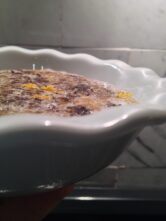
Wheat-Free Orange Curd


(makes about 2 cups)

Serve this with delicious gluten-free Angel Food Cake as a zesty dessert!


INGREDIENTS

1 c sugar

3 large eggs

1 tbsp orange zest

2/3 c fresh orange juice

½ c butter


DIRECTIONS


1. In a medium saucepan, whisk together sugar and eggs. Sire in orange zest, juice, and butter. Cook over medium heat, whisking constantly for 10 to 12 minutes, or until thickened.


2. Remove from heat. Let cook. Spoon curd into airtight containers, and store in refrigerator for up to 2 weeks.

Tina Turbin

Add to FacebookAdd to DiggAdd to Del.icio.usAdd to StumbleuponAdd to RedditAdd to BlinklistAdd to TwitterAdd to TechnoratiAdd to Yahoo BuzzAdd to Newsvine


August 31st, 2010

Gluten Enzymes

The body has its own digestive enzyme for gluten known as dipeptidyl peptidase-IV (DPPIV).  When this enzyme is supplied, it greatly assists in the hydrolysis of propy peptidase assimilating proline-rich proteins.  “What’s this?” you ask?

Read on:

Now this may all sound like a foreign language to you but let me clarify what it all means.  These are the exact “remnants” that can cause severe troubles for the celiac.

The DPPIV enzymatic activity actually assists in breaking down the difficult to digest peptides.

Reports in the July 1993 American Journal of Physiology says that the sequence of digestion which leads to partial digestion of gluten proteins exasperates the gastrointestinal condition and one of the enzymes required to break down these peptides has been identified as DPPIV.  The lack of this enzyme in the small intestine prevents this digestion and can result in an immune response which inflames the small intestine.

There’s additional support from the October 2002 Journal of Physiology Gastrointestinal and Liver Physiology stating that DPPIV was instrumental in the breakdown of the gluten’s peptides.  The possible strategy for celiac sprue has been recognized through enzyme therapy.  Up to now only a strict adherence to a gluten-free diet has been the only therapeutic option.

In the May 2007 Scandinavian Journal of Gastroenterology, the researchers made note and confirmed that gluten intolerant individuals definitely have a deficiency in the necessary gluten digesting enzymes.

There are a number of new products on the market currently offering supplementation with products containing DPPIV such as Metabolic Response Modifiers (MRM), Gluten-Free™, and Enzymatic Therapy to name a few.

Any celiac is warned that to date, a strict adherence to a gluten-free diet is the only prescription to follow for optimum health and repair of the delicate tissue lining of the small intestine and the villi.

There may be hope with new research into this area of enzymatic therapy and DPPIV.

Tina Turbin
www.GlutenFreeHelp.info

Add to FacebookAdd to DiggAdd to Del.icio.usAdd to StumbleuponAdd to RedditAdd to BlinklistAdd to TwitterAdd to TechnoratiAdd to Yahoo BuzzAdd to Newsvine


August 30th, 2010

Pro Cycling Team – Gluten-Free


Dr. Allen Lim, the former exercise physiologist for the renowned Garmin Transitions Pro Cycling team and their CEO, Jonathan Vaughters, placed the team on a gluten-free diet.  What were their reactions and changes?  Well read on.

The first reactions were of shock.  With a full day of training these guys burn an easy 8,000 calories, needing carbohydrates to not only fuel energy but the excess glucose gets stored in muscles as glycogen which helps during exercise as well as during recovery.  Without this they will have a terrible time.

To simply handle this, their hired chef did what all celiacs and gluten-intolerant people get accustomed to – switch their source of grains and carbohydrates.  No pancakes!  That’s silly of course.  They ate pancakes. Just gluten-free ones.

The results of this change were enlightening to the team as a whole.  Do keep in mind these men are severe athletes, not celiac (or so they hope) and not gluten intolerant (or so they thought).  There are reports of digestion being much better, better recovery, sleep improvement, weight loss and overall improved performance.

Interestingly enough, the initiator of this diet Dr. Allen Lim was with Lance Armstrong’s RadioShack team.

Leaves one to wonder if Lance’s crew was on a gluten-free diet as well, while in training.

Tina Turbin
www.GlutenFreeHelp.info

Add to FacebookAdd to DiggAdd to Del.icio.usAdd to StumbleuponAdd to RedditAdd to BlinklistAdd to TwitterAdd to TechnoratiAdd to Yahoo BuzzAdd to Newsvine


August 27th, 2010

Gluten Intolerant, Gluten Sensitive & Celiac- Explained by Ron Hoggan, Ed. D.

The phrase “gluten intolerant” is a rather nebulous term which is why I try to avoid using it. I prefer to use ‘gluten sensitivity’. The sub-groups of gluten sensitivity are: gluten sensitive enteropathy (otherwise known as celiac disease); non-celiac gluten sensitivity; neuropathic gluten sensitivity, etc.

Gluten sensitivity is the term recommended by the world renowned celiac researcher, Dr. Michael N. Marsh. The terminology I advocate is congruent with Dr. Marsh’s assertions and it provides some clarity, as it often identifies specific sites of damage induced by gluten, distinguishes between some subgroups, and allows even the novice to
accurately interpret some discussions of these topics.

The varying opinions on another’s biopsies may have be driven by just how familiar or unfamiliar  physicians are with the Marsh system for categorizing intestinal damage, which was developed by the same Dr. Michael Marsh mentioned above. The Marsh system is gradually being adopted throughout most of the industrialized world, as older pathologists and gastroenterologists advance their understanding, and the younger ones usually learn about the Marsh system during their specialization training.

Of course, the terminology I recommend also makes it very clear that there are a number of types of gluten-induced damage to various body systems. Dr. Rodney Ford, on the other hand, has offered the term gluten syndrome’ to incorporate the various groups of gluten sensitivities into one group. I also subscribe to that choice of terminology. Careful word choices in this regard are, I think, critical to understanding the broader field of gluten sensitivity, and that celiac disease is just one sub-set of a rather large and growing continuum of illnesses that require a life-long gluten free diet.

Celiac disease has long been considered the most serious of this spectrum and  other gluten sensitivities were considered “lesser” ailments. However, Anderson et al recently published findings that suggest that non-celiac gluten sensitivity may more frequently lead to serious illness or death  than celiac disease (1). If confirmed by
further research, we may need to revise our opinions regarding where celiac disease falls on the gluten sensitive spectrum.

I hope my comments serve to clarify this issue for many.
Best Wishes,
Ron Hoggan, Ed. D.

co-author: Dangerous Grains ISBN: 978158333-129-3 www.dangerousgrains.com ,author: The Iron Edge: a complete guide for meeting your iron needs ISBN: 978-0-9736284-4-9 http://tiny.cc/ironedge , author: Smarten Up! ISBN: 978-0-9736284-3-2 www.smartenup.info

Source:

1. Anderson LA, McMillan SA, Watson RG, Monaghan P, Gavin AT, Fox C,
Murray LJ. Malignancy and mortality in a population-based cohort of
patients with coeliac disease or “gluten sensitivity”. World J
Gastroenterol. 2007 Jan 7;13(1):146-51.

Add to FacebookAdd to DiggAdd to Del.icio.usAdd to StumbleuponAdd to RedditAdd to BlinklistAdd to TwitterAdd to TechnoratiAdd to Yahoo BuzzAdd to Newsvine


August 26th, 2010

Gluten-Free Sole Vin Blanc with Ginger-Lime Butter

Someone near and dear to my heart sent me this recipe, and I just HAD to share it with you!


INGREDIENTS

2-4 filets of sole (or other lean fish)

¼ cup shallots, chopped

1-2 tbsp cilantro, finely chopped

¼ cup white wine

¼ cup water

1-2 oz. ginger-lime butter (see recipe below)


DIRECTIONS ( for main dish)

1. Sprinkle the shallots over the bottom of a sauté pan. Add the wine and water. Add the filets and season with salt and pepper.


2. Cover the pan with foil or parchment paper. Place pan on high heat until the piqued comes to a simmer. Immediately lower the heat, maintaining a simmer and poach the fish for 2-5 minutes, or until the fish is done.


3. When the fish is cooked, remove from the pan and keep the fish warm.


4. Bring the liquid in the pan to a boil and reduce until it is syrupy and 1-2 tbsp remains in the pan.


5. Remove the pan from the heat and whisk the butter into the liquid. Add chopped cilantro. Adjust seasonings, pour sauce over fish and serve. Garnish with cilantro.


Ginger-Lime Butter:

INGREDIENTS

4 tbsp butter, unsalted and room temperature

2 tbsp (1 lime) of lime zest, grated

1 tsp ginger, grated

½ tsp salt

pepper, to taste


DIRECTIONS ( for butter)

Combine all the ingredients and stir until smooth. Refrigerate until firm, about 1 hour (optional).

Tina Turbin

Add to FacebookAdd to DiggAdd to Del.icio.usAdd to StumbleuponAdd to RedditAdd to BlinklistAdd to TwitterAdd to TechnoratiAdd to Yahoo BuzzAdd to Newsvine


August 25th, 2010

Ben & Jerry’s – Gluten-Free Flavor List


We all love ice cream, especially when it’s gluten-free right?  Well folks, the following list makes it very easy for you to enjoy some of the best ice cream in the world:

BEN&JERRY’S Gluten-Free Flavor List:


Ice Cream

Butter Pecan

Cherry Garcia

Chocolate Fair Trade-Chocolate Peanut Butter Swirl

Chocolate Macadamia

Chunky Monkey

Coconut Almond Fudge Chip

Coffee Fair Trade

Coffee Coffee Buzz Buzz Buzz

Crème Brulee

Mint Chocolate Chunk

New York Super Fudge Chunk

Orange and Cream

Phish Food

Strawberry

Triple Caramel Chunk

Vanilla Fair Trade

Vanilla Heath Bar Crunch

Yogurt

Black Raspberry Swirl LF Yogurt

Vanilla LF Yogurt

Sorbet

Berry Berry Extraordinary

Jamaican Me Crazy

Lemonade

Mango Mango

Strawberry Kiwi

No Sugar Added

NSA Vanilla Fudge Chip


Tina Turbin
www.GlutenFreeHelp.info

Add to FacebookAdd to DiggAdd to Del.icio.usAdd to StumbleuponAdd to RedditAdd to BlinklistAdd to TwitterAdd to TechnoratiAdd to Yahoo BuzzAdd to Newsvine


August 23rd, 2010

U.S. Way Behind in Gluten-Free Awareness

     Celiac disease in America affects three million citizens, but only one out of every hundred of its sufferers has been diagnosed. The average American has never heard of the disease, and it doesn’t occur to the average American doctor to test for it.

      There are several organizations in the United States which are researching the disease and working hard to raise celiac awareness and support. One such organization is the Celiac Disease Research Center at Columbia University, headed by Dr. Peter Green, MD, a Professor of Medicine at the University. He is personally responsible for the diagnosis of 2,400 people with celiac disease every year and is dedicated to increasing the celiac diagnosis rate in the United States.


     A higher rate of diagnosis yields a higher rate of support, Dr. Green says. This means more and more grocery stores and restaurants offering gluten-free foods and gluten-free cooking to gluten-intolerant consumers. Abroad, there are more gluten-free options available because there are more people diagnosed with gluten intolerance or celiac disease. For instance, every pizzeria in Sydney, Australia offers gluten-free pizza, made with gluten-free flour.


     Why is America way behind in celiac awareness? It probably has something to do with the fact that celiac disease is the only autoimmune disease that the government doesn’t support with research grants. Centers such as Dr. Green’s Celiac Disease Research Center are one-hundred percent dependent on charitable donations or university funds. Even though diagnosis is slightly up for celiac adults, this isn’t enough to raise awareness and bring relief for the three million people who suffer from celiac disease, nearly ninety-seven percent of whom don’t even know the cause of their painful symptoms. With increased diagnosis, we will surely see increased support, and soon the celiac community will be able to enjoy the same quality of life and food and cooking options which is enjoyed by, for instance, the lactose-intolerant community.

Tina Turbin

Add to FacebookAdd to DiggAdd to Del.icio.usAdd to StumbleuponAdd to RedditAdd to BlinklistAdd to TwitterAdd to TechnoratiAdd to Yahoo BuzzAdd to Newsvine


August 22nd, 2010

Celiac Disease and Miss Indiana’s Mission

Jenna Drew holds the title Miss Indiana (PA) International 2010 and her platform is Celiac Disease Awareness. She works hard to make “Gluten Free” a common household term. My friend, Jenna gathers many gluten-free bloggers in her efforts to help – read this interview:

http://www.glutenfreebloggers.com/2010/05/07/blogger-spotlight-gluten-free-help/

Tina Turbin www.glutenfreehelp.info


Add to FacebookAdd to DiggAdd to Del.icio.usAdd to StumbleuponAdd to RedditAdd to BlinklistAdd to TwitterAdd to TechnoratiAdd to Yahoo BuzzAdd to Newsvine


August 20th, 2010

Can Do Kid- A Terrific Gluten-Free Company


Do you like children, delicious food, and supporting a terrific cause? Well, I’ve got quite a food company to share with you!  The name is Can Do Kid.

Can Do Kid founder and owner Deb Luster supplies tasty, gluten-free nutrition bars all in the hopes of satisfying hunger before it strikes in those little tummies, jam-packed with nutrients, and sure to maintain smiling faces!

Can Do Kid nutrition bars are gluten-free, made from all-natural ingredients, and contain sixteen essential vitamins and minerals. They are free of trans fats and high-fructose corn syrup.

I have personally tasted each and every one of these bars, and to be absolutely sincere, these bars are scrumptious. I then went further and ran a taste test with many children and their parents, and these tasty bars received a 100% satisfaction rate.

I had the opportunity to speak with my new friend, Deb Luster about her company to discover that there is true passion and dedication behind this company, directly from her heart. Deb is passionate about raising positive kids and being around positive people. She has full intention to spread the word about positive thinking and to improve this attitude in households everywhere. She wants to inspire kids to be smart and special and to know—in fact, to walk through life knowing—“I can do anything.”

Deb has quite an active and impressive history as a woman and executive. In 1990, she helped Annie’s Homegrown grow from a concept to what it is today, a thriving company. With Deb living on the west coast and Annie on the east, she dealt with opposites in many aspects, yet the vision evolved into a perfect, positive force—a fun and thriving business.

Working hard as usual and pregnant, one day Deb’s water broke and she knew she had another calling—motherhood. She stayed on as part-owner on the Board of Annie’s, in 2002 stepping aside from Annie’s as she devoted more time to enjoy motherhood. She continued to work on many projects—mostly helping others with their companies. Expanding companies is truly her forte.

YouTube Preview Image

In November 2004, along with her family, she published her first book, I Can Do Anything (read the I Can Do Anything book review) and soon launched products such as t-shirts and stickers. In September 2007, her family’s second book, I’m Happy Just the Way I Am was published. In August 2005, after lots of tasting, packaging, and developing concepts, she and her sister (co-founder and Director of Sales) manufactured the first Can Do Kid nutrition bars. With a strong business sense, she knew that kids love food items with animals, as they are symbols kids remember. So, on every bar, there’s a cheetah. Why a cheetah? Because Deb loves cheetahs.

It wasn’t long until stores all over were stocking up on and displaying the bars and her book!  In February 2009 Deb was at a trade show and was introduced more in-depth to the concept of gluten-free. With only one ingredient change, the Can Do Kid bars were now labeled gluten-free and made available to all those in need of a GF diet, such as celiac and gluten-sensitive consumers. These bars currently come in 3 delicious flavors: CAN-illa Vanilla, Chocolate Crunch, and Cookies and Cream.

These bars are on my Highly Recommended list. Grab a bar and adopt Deb’s motto: “It’s not about age—it’s about attitude!” Grab a bar! You and your kids will be happy you did.


Can Do Kid executives have their bars tested regularly through the University of Nebraska FAARP to make sure that they contain no gluten. As of August 20101 they are not in a dedicated gluten-free facility.

As of August 2010 you will find the Can Do Kid bars in over 50 Safeway stores!

Tina Turbin
www.GlutenFreeHelp.info

Blog Widget by LinkWithin

Add to FacebookAdd to DiggAdd to Del.icio.usAdd to StumbleuponAdd to RedditAdd to BlinklistAdd to TwitterAdd to TechnoratiAdd to Yahoo BuzzAdd to Newsvine

Back to Top
Follow me on Twitter

Find me on Linked in Find me on Facebook


Gluten Free Help Contests

Tina Turbin

About Me | see more

Tina Turbin became extremely interested and involved in the subjects of gluten free, gluten sensitive and celiac disease a number of years ago as a result of...

Follow Me!
Bookmark and Share

Links I Like